

From next week, Singapore consumers will be able to buy the first Wi-Fi 8 routers from networking firm TP-Link at a Vivocity roadshow from November 16 to 22. Can Buy or Not readers can enjoy an exclusive discount — read all about that in our hands-on with TP-Link’s Wi-Fi 8 router.
It’s really early days, though. Wi-Fi 8 is expected to be finalised only in 2028. But as usual, networking vendors are already preparing Wi-Fi 8 routers based on early draft specifications. These routers will typically receive firmware updates as features are confirmed and rolled out. But client devices like smartphones and PCs that support Wi-Fi 8 have yet to be released. We’ll probably only see a few of these devices coming out next year.
So what exactly does Wi-Fi 8 bring to the table? And should you even consider buying a Wi-Fi 8 router now or in the near future?
The answer to the first question is in the name of the initiative behind it: Ultra High Reliability (UHR). As chipmaker Qualcomm puts it in this primer about Wi-Fi 8, the standard marks a “fundamental pivot — moving beyond peak speeds to prioritise reliable performance in challenging real-world conditions”.
In fact, the theoretical maximum speeds for Wi-Fi 8 across its three frequency bands (2.4GHz, 5GHz and 6GHz) are the same as Wi-Fi 7. Instead, Wi-Fi 8 will introduce features (and a bunch of new acronyms) that are supposed to “make wireless connections faster, more responsive and more robust.” We’re talking about lower latency, fewer dropped packets, and higher throughput even in congested environments with lots of interference.
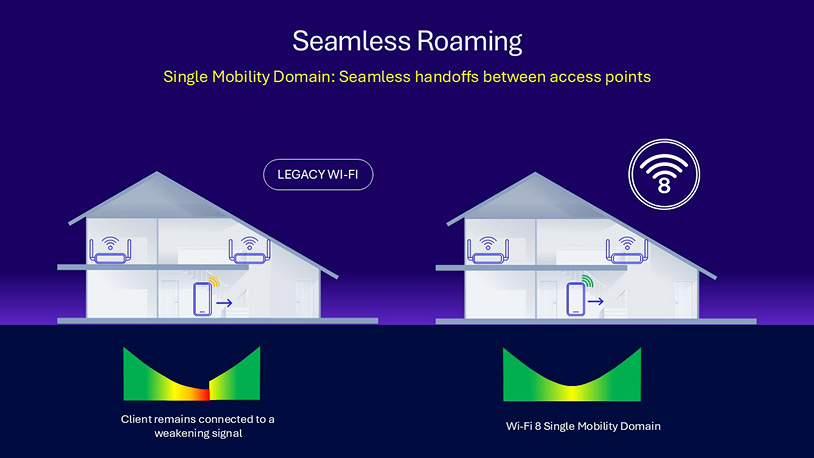
For instance, Wi-Fi 8 is said to be better equipped to handle the transition when switching from one access point to another. So if you walking from one room to another while doing a video call on your smartphone, you’re less likely to experience buffering or dropped calls.
Another handy feature called in-device coexistence (IDC) is designed to reduce any disruption from other wireless technologies like Bluetooth and ultra-wideband (UWB), which in devices like smartphones and laptops, are often integrated in the same wireless chipset as Wi-Fi, and likely share the same antennas or spectrum.
Wi-Fi 8 also aims to improve the Wi-Fi performance at the outer edges of the network coverage. The 6GHz band, for instance, lacks the range of 2.4GHz and even 5GHz networks. But Wi-Fi 8’s new features, such as one that results in a higher transmit power, are designed to enhance signal strength and range.
In fact, I was pleasantly surprised while testing TP-Link’s Wi-Fi 8 router that my smartphone could actually connect consistently and make use of the 6GHz band in my furthest bedroom. Previously, with a Wi-Fi 7 router, I would be lucky to even connect to the 6GHz band in the first place. But aside from some of the new AI-powered features that TP-Link added to its app, the Wi-Fi speed feels pretty much the same as my Wi-Fi 7 router.
During my testing of two Wi-Fi 8 routers (TP-Link and Asus), I didn’t encounter any major issues. The setup was smooth and the Wi-Fi network was stable. In short, Wi-Fi 8 feels polished enough for consumers, which explains why the routers are being launched, even if not all the cool features are ready.
So, should you consider buying a Wi-Fi 8 router now? Given the hefty early adopter tax for these devices, the sensible thing would be to hold off for now. But if you’re overdue for a router upgrade (say you’re still using a Wi-Fi 5/6 model), have a 10Gbps broadband plan, and would like to future-proof your home, I think you wouldn’t be disappointed by these Wi-Fi 8 routers, even at this early stage.
This week, we looked at the refreshed ROG Xbox Ally X20 Windows gaming handheld, went back to the realm of Azeroth with World of Warcraft Forever, and tested Jabra’s latest compact foldable headset.
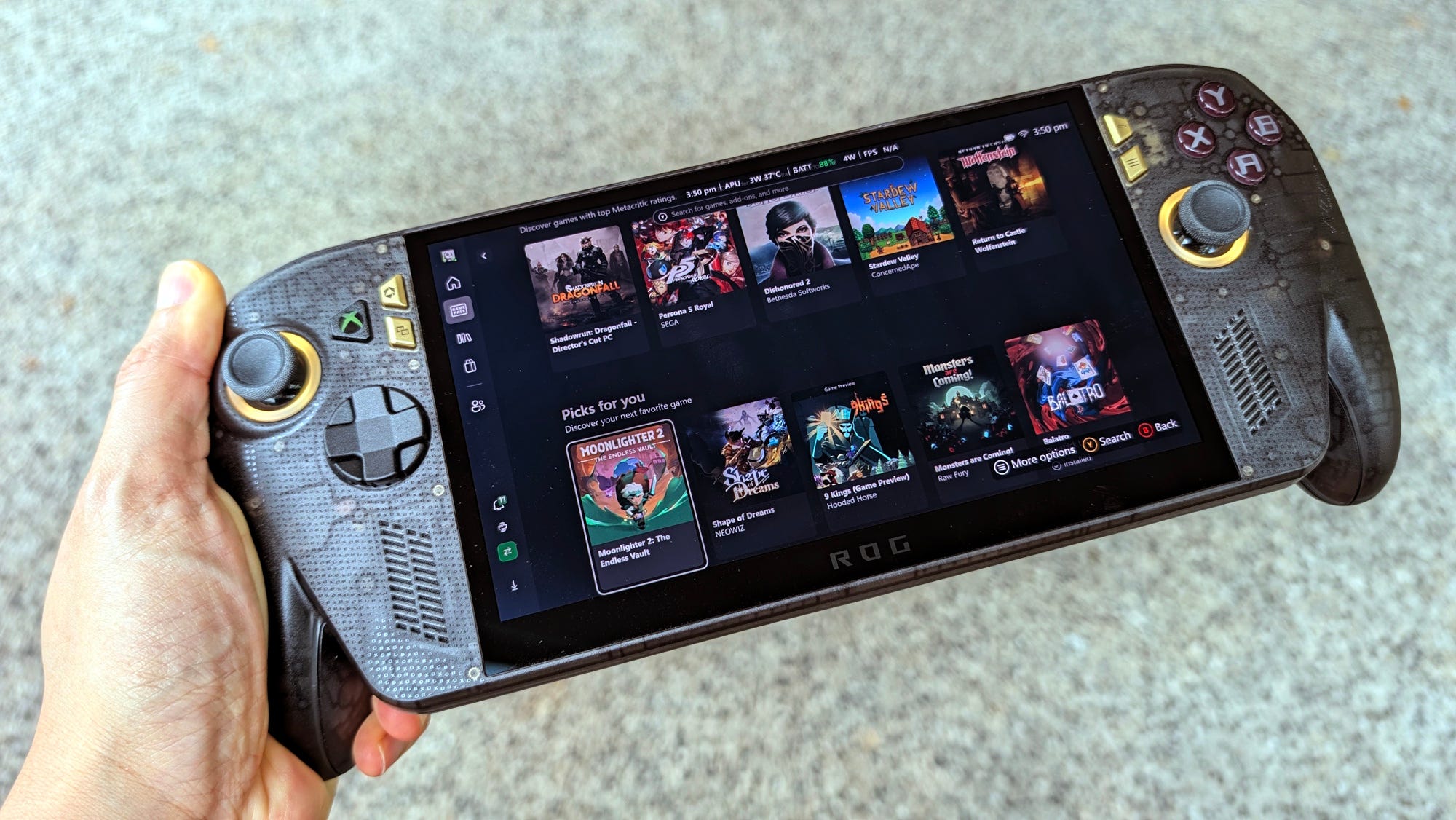
With the ROG Xbox Ally X20, Asus’ Windows gaming handheld takes the oft-travelled OLED upgrade route taken by other handhelds from the Steam Deck to the Nintendo Switch. The new OLED screen on the Ally X20 is certainly the highlight of the console, along with TMR joysticks that are immune to stick drift. The performance, though, is similar to the previous version, but in a more eye-catching design (and at a more eye-watering price).

Fans of WoW can now return to a slower-paced Azeroth with World of Warcraft Forever, which is level-capped at 60, and expands on the original WoW but without the later expansions. The game offers a new race, four new explorable zones, plenty of content, and more importantly, lets you play it at your own pace.
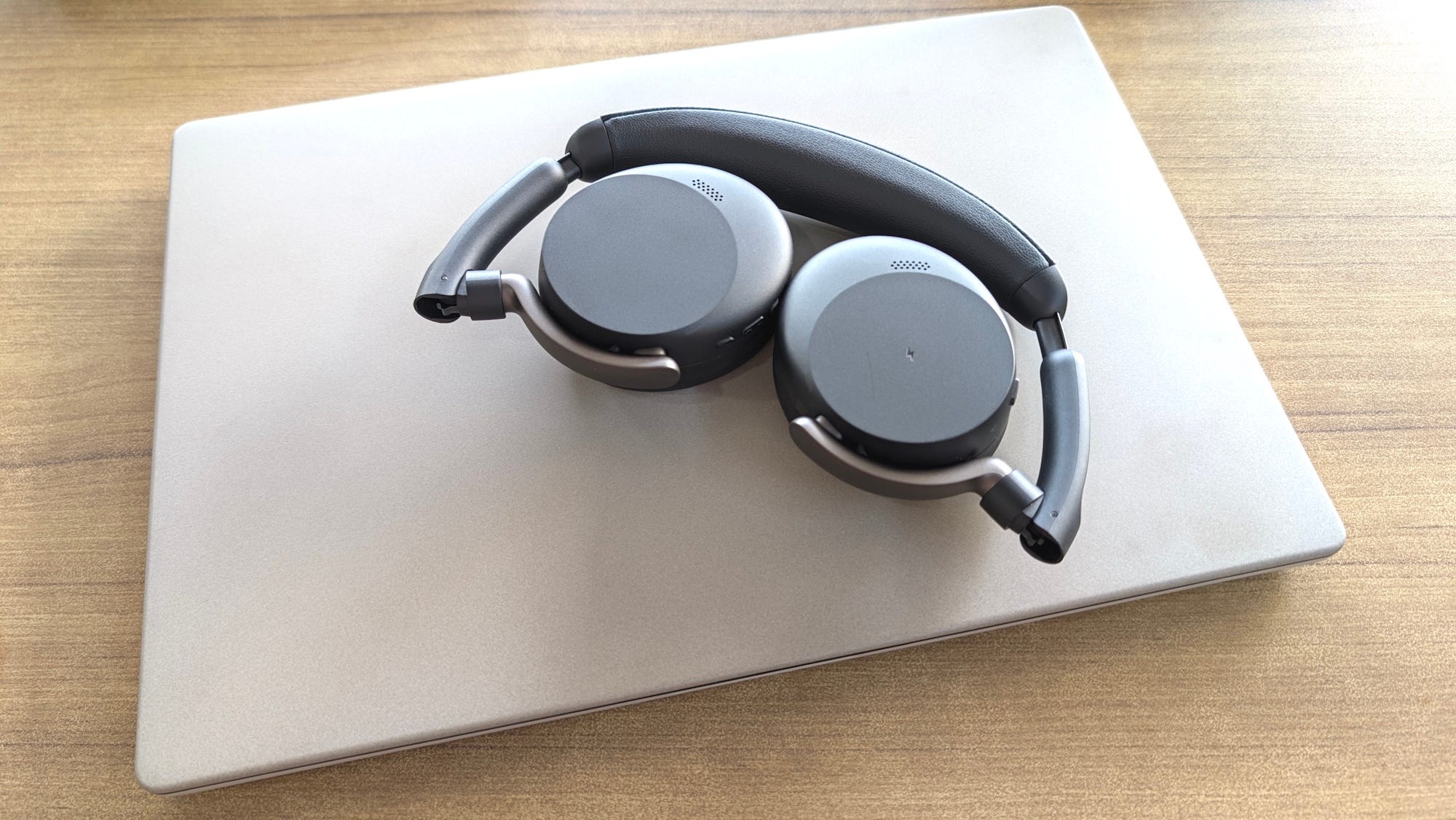
The Jabra Evolve3 65 Flex headset collapses and folds into a compact form that’s easy to carry in its included case. Compared with its predecessor, the new version replaces the hideaway boom with concealed microphones instead for a more consumer-friendly look. The headset is still really lightweight, and comfortable to wear, while the Busylight LEDs that light up in red make it clear that you’re taking a call.