Second time lucky for Valve?
But the new Steam Machine ain't cheap
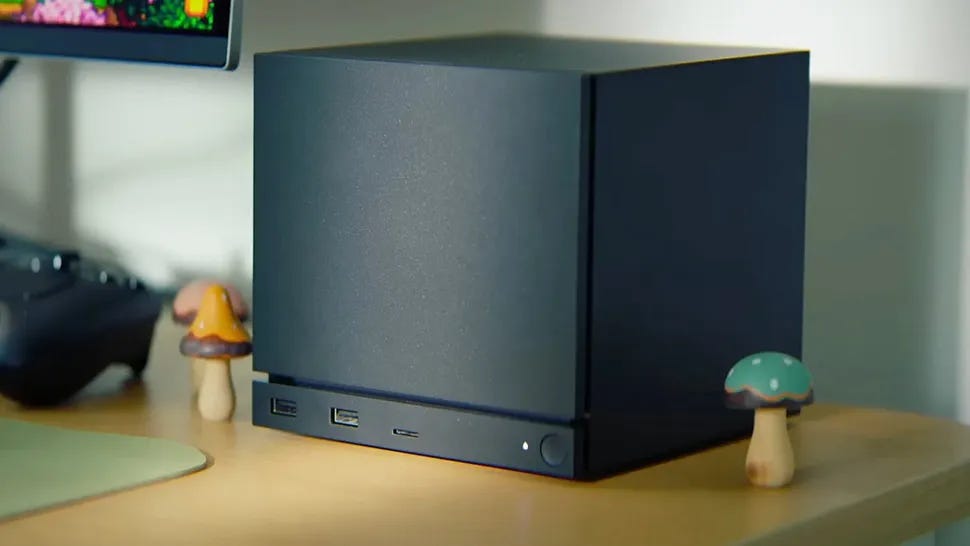
The first reviews of Valve’s Steam Machine, a compact desktop PC that offers a console-like gaming experience for your Steam games, are out. While the design and performance appear to live up to the hype, reviewers are blanching at the price. Due to the ongoing memory shortage, the Steam Machine starts from US$1,049 (around S$1,350, unavailable in Singapore) for the base 512GB model. Adding the Steam controller pushes the price to US$1,128. Yikes!
Now, I’m old enough to remember when Valve introduced the OG Steam Machine. About a decade ago, Valve partnered with several PC manufacturers like Alienware to create Steam Machines that ran SteamOS, its Linux-based operating system. However, SteamOS was still in its infancy, and there weren’t as many games that could run on it. It also didn’t help that the Steam Machines all had different hardware configurations, which made for an inconsistent experience. Unsurprisingly, sales didn’t meet expectations, and Valve abandoned the concept after a few years.
But Valve learnt from the failure. The company worked on improving Linux compatibility for Steam games. Eventually, it came up with the Steam Deck handheld gaming PC, which has been a huge success. So the latest Steam Machine is Valve’s second bite at the cherry.
Seeing how Valve seems to have perfected the formula for the Steam Deck, I was confident that the Steam Machine would be equally successful when it was first announced last year. But the memory crisis and the resulting inflation have thrown this into doubt. Of course, one could argue that it’s expensive to build any PC in the current climate, and a similarly-specced Windows PC would cost just as much.
At least Valve is now letting users install SteamOS on their own PCs. That’s great news for gamers that have an existing PC, and looking to move away from Windows, but aren’t convinced by current Linux distros. I don’t blame them since SteamOS is designed for gaming, after all. There’s still a significant stumbling block in the form of Nvidia graphics driver support, but hopefully that will be resolved soon. If you’re keen to try (and have an AMD graphics card), you can find it here.
This week, we tested JBL’s new headphones, a Logitech keyboard and mouse combo that’s built for the office, and Sony’s flagship in-ear headphones.
The JBL Live 780NC is one to consider if you’re shopping in the S$300 range for a pair of over-ears. You get decent sound, good noise cancellation, and up to 50 hours of battery life with noise cancellation. The ear cups are plush and comfortable, though the headband could do with a bit more padding.
With its quiet operation and plenty of cushioning, including a palm cushion for the mouse, the Logitech Signature Comfort Plus Combo is the perfect wireless keyboard and mouse set for the office. The handy shortcuts and Logitech Actions Ring feature make it even more convenient for common computing tasks, while the long battery life (up to three years for the keyboard) means one less thing to worry.
Sony’s latest flagship in-ear earbuds maintain the high standards set by previous models. They still sound great, though the noise cancellation, while good, has been surpassed by other competitors. Battery life is good (up to 8 hours with ANC), and these earbuds remain very comfortable to use.


