RGB Mini-LED TVs to challenge OLEDs
The year of RGB Mini-LED TVs
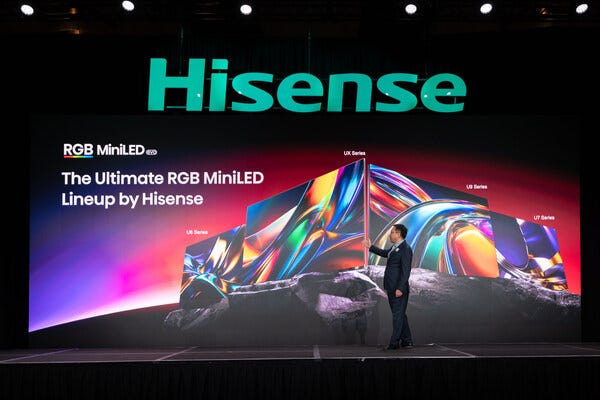
It never ceases to amaze me that we are still coming up with new ways of making televisions. Aren’t they supposed to be mature products that hardly get any attention? But it certainly wasn’t the case at CES 2026, where we got barraged by the new display tech that every TV manufacturer are pushing this year.
This new tech is RGB Mini-LED. It’s an upgrade over the Mini-LED TVs that’s currently in the market. If you need a quick primer, we wrote about Sony’s implementation last year. But in short, RGB Mini-LED TVs will offer purer, more accurate colours (100% BT 2020), higher brightness (up to 10,000 nits), and higher contrast compared with older Mini-LED TVs.
These characteristics make RGB Mini-LED TVs even more of a threat to OLEDs. In fact, LG Display, which makes OLEDs for TV makers, launched a YouTube series to counter the hype of RGB Mini-LED TVs, highlighting some of the potential issues with this tech. For example, there could be a halo effect as different colour zones bleed into each other, causing flesh tones to look inaccurate.
OLEDs also retain an advantage in other areas. For instance, blooming is non-existent on OLED TVs, unlike with RGB Mini-LED TVs, which despite having more dimming zones than before, are still no match for OLED’s pixel-level lighting control.
Funny thing is, LG, which is a separate entity from LG Display, announced its own RGB Mini-LED TVs at CES. So you have all the big brands launching their own takes on RGB Mini-LED TVs. Given that it’s a new tech, you can expect to pay a premium for these TVs when they are launched later this year.
The new competition from RGB Mini-LED TVs could be a good thing. There’s talk from LG Display of cheaper OLEDs to match the more attractive price points of Mini-LED TVs. So if you’re a fan of OLEDs, hopefully you can get them at lower prices and at larger screen sizes in the near future.
Interestingly, TCL is hedging its bets over RGB Mini-LED technology. While the Chinese TV maker has announced a RGB Mini-LED TV, it’s also trying to improve current Mini-LED TV technology by tweaking the quantum dot layer. Dubbed “Super Quantum Dot” or SQD for short, this technology makes similar claims on brightness and colour volume as RGB Mini-LED TVs, but without the issues like colour bleed. It remains to be seen whether this technology will catch on, but TCL appears to be the only manufacturer exploring this route for now.
So what does this mean for consumers? For starters, I think we’ll be bombarded by a slew of acronyms and marketing jargon as all the TV makers come up with fancy and impressive names for the new TVs. You’re going to see super-high brightness levels on TV spec sheets, but it’s worth noting that most content isn’t going to take advantage of that yet.
And whether you like it or not, TV makers are still trying to make AI work on TVs. Samsung, for example, has a Vision AI Companion feature on its TVs that can change up the viewing experience, like boosting the volume of the stadium noise or removing the live commentary while watching sports, with a verbal command.
In short, it’s gonna be an exciting year for TV enthusiasts. The average consumer, though, should be wary of the claims made by TV brands.
This week, we tested another AI-powered note taker, this time from audio brand Boya. We also tried the cooling and misting effect from the Shark FlexBreeze HydroGo Portable Fan, and an affordable mid-range phone from Xiaomi.
Boya’s take on an AI-powered pocket recorder or note taker is a good first attempt. It’s relatively handy, is MagSafe compatible, and offers AI transcription and summary for over 140 languages. It includes 320 transcription minutes, but you’ll need to pay for a subscription or add-ons if you need more minutes.
The Shark FlexBreeze HydroGo Portable Fan (S$199) adds an ultra-fine mist spray to help you cool down. Depending on the usage mode, you may need to top up the water after 30 minutes to an hour of use. This portable, battery-powered fan will last up to 12 hours at the lowest fan speed, and only an hour if it’s going full blast with misting. It’s a good fan for outdoor use.
The Redmi Note 15 Pro+ offers incremental upgrades and a slightly-tweaked design. The biggest upgrade is the battery life, which is around 1.5 hours longer than the previous version. The cameras are also decent, especially for the price (S$599). However, the performance hasn’t improved by much.


