Nvidia to spark PC reinvention
The beginning of the end for x86?
Apple silicon, Qualcomm ARM processors in Windows laptops, and now Nvidia’s RTX Spark. Is this the beginning of the end for the x86 architecture, which has dominated CPUs for the last 40-odd years?
The reality is much more nuanced. But it’s evident that the x86 architecture is facing its greatest challenge yet — at least on the consumer front. Because Nvidia’s new RTX Spark superchip, which Nvidia CEO Jensen Huang announced yesterday at his Computex keynote, takes the competing ARM architecture, which has mostly been used in mobile devices, to potentially new heights.
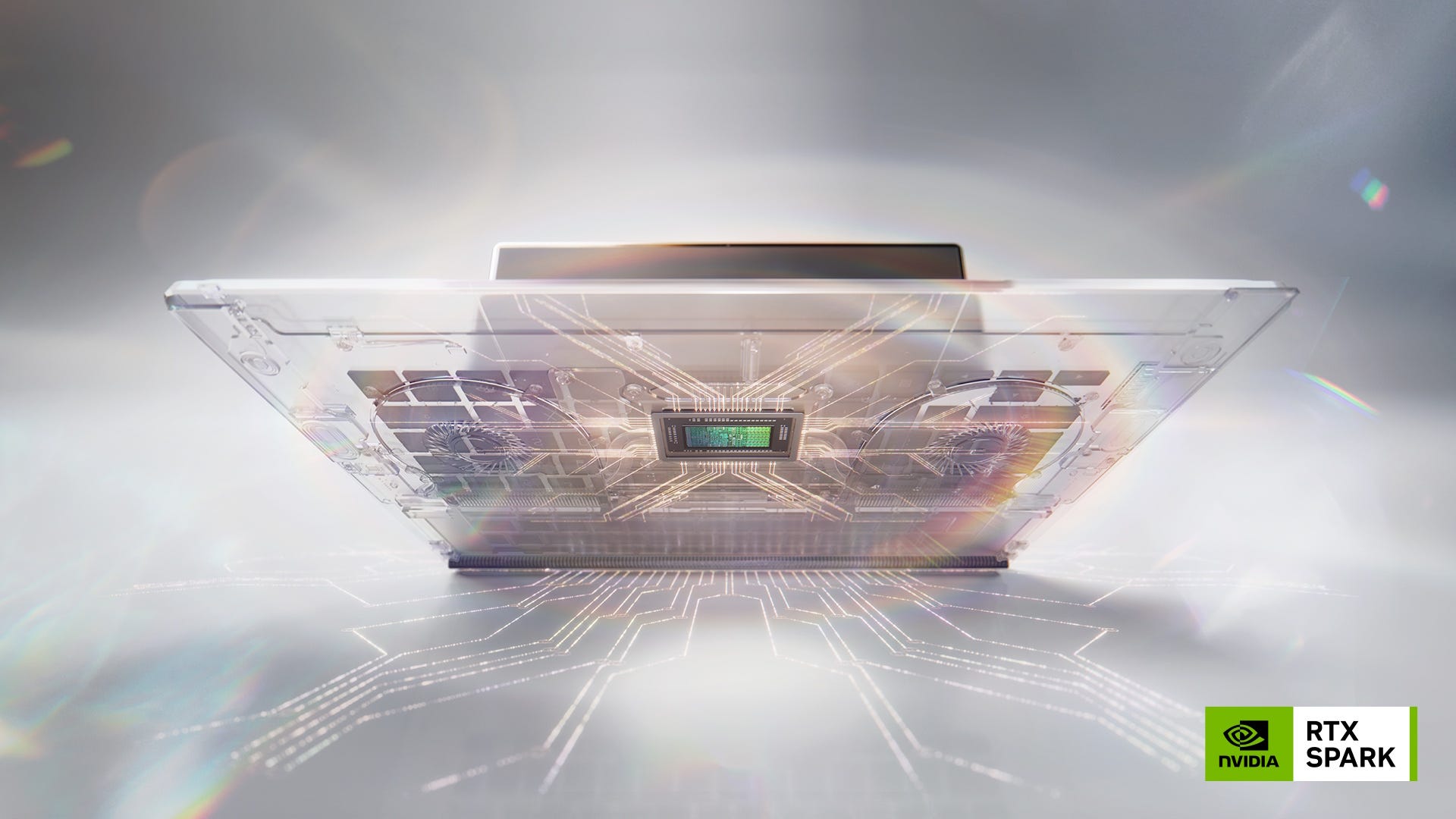
What the RTX Spark offers is a Windows alternative to Apple silicon. It brings together a MediaTek ARM-based CPU, Nvidia’s Blackwell RTX graphics and up to 128GB of high-speed unified memory. The result: A chip that’s said to be designed for Personal AI, basically AI agents running from local PCs instead of the cloud. The same graphics and processing power offered by the RTX Spark also makes it suitable for creating content and gaming.
The first RTX Spark laptops include Asus’ ProArt series of laptops, which are typically designed for content creators, meaning features like colour-accurate OLED displays. Other PC makers, including Dell, HP, Lenovo, MSI and Microsoft also plan to release similarly powerful premium laptops. At least that’s my guess based on their product names (e.g. Dell XPS and HP OmniBook).
Because the actual specs for most of these RTX Spark notebooks have yet to be announced. However, the chip has been compared with the mid-tier RTX 5070 graphics, so it’s probably not going to be in high-end gaming notebooks, at least not at this moment. We also don’t have any information about the pricing, while availability is said to be “in fall”.
Nvidia itself hasn’t showed off any benchmarks of the RTX Spark, though there are figures floating out there that has it beating the Apple M5. If these numbers are remotely accurate, it would mean that RTX Spark laptops will definitely be competitive with ARM-based notebooks from Apple and Qualcomm, as well as the x86-based models from AMD and Intel.
But while the Nvidia RTX Spark may not blow away any of its rivals away yet, its introduction will mean more resources put into ARM PCs. Microsoft presumably will continue to improve Windows support for ARM chips. Adobe is also apparently “rearchitecting Photoshop and Premiere from the ground up for RTX Spark”. Game developers will have another reason to optimise their games for the ARM platform, which is good news for Apple users, too.
That being said, the latest x86 laptops aren’t shabby, either. In fact, Intel’s new Panther Lake chips have been very impressive in terms of battery life and performance. In my tests, the ones with Intel’s Arc B390 graphics outperformed ARM-based models using Qualcomm’s processors in gaming. Given Nvidia’s expertise in graphics, it could be a very different story against the RTX Spark, though.
And that’s just for gaming, content creation, and general computing. When it comes to AI, there’s no doubt that Nvidia’s RTX Spark has the edge here over everyone since these laptops will have the whole Nvidia stack (hardware and software) out of the box.
In short, the future looks exciting for PCs — albeit an expensive one for consumers. While I don’t see x86 laptops going away anytime soon — and x86 chips from AMD and Intel are still dominant when it comes to server hardware — if Nvidia can match the progression of Apple silicon these past years, I can see a significant shift from x86 to ARM. Especially from those who have embraced AI fully. But who knows? Nvidia does have a partnership with Intel, so it could be developing a similar x86 version of the RTX Spark but with Intel inside.
This week, we tried Xiaomi’s latest smartphones, typed up a storm using Logitech’s hybrid keyboard, and took LG’s new portable laptop out for a spin.
The Xiaomi 17T Pro and 17T are excellent upper mid-range phones that offer solid performance and good photography chops, including a new camera sensor (17T Pro) and improved telephoto (17T) in a premium iPhone-inspired package. However, prices have gone up by a fair bit, as with most phones and laptops this year.
Can’t decide between analog and mechanical keyboards? You don’t need to choose with the Logitech G512 X 98 gaming keyboard. It lets you swap up to nine switches from the default mechanical ones to analog ones. And you can do that on the go since all the components and the tools are cleverly integrated into the keyboard design.
The new LG gram Pro doesn’t deviate too much from previous iterations. It’s still skinny and lightweight, but now with a new Intel Core Ultra X7 that’s pretty good at games. However, I did miss having a presence detection feature, while the price has, like many new laptops, gone up this year.


