Modular headphones should be the way
Why aren't modular headphones a thing yet?
I had to throw away several pairs of headphones recently. The ear cushions and headband — made from synthetic leather — had rotted away while the headphones were left unused in the cabinet. I also unearthed a couple of wireless earbuds that had gone bad in the same manner. They all got binned.
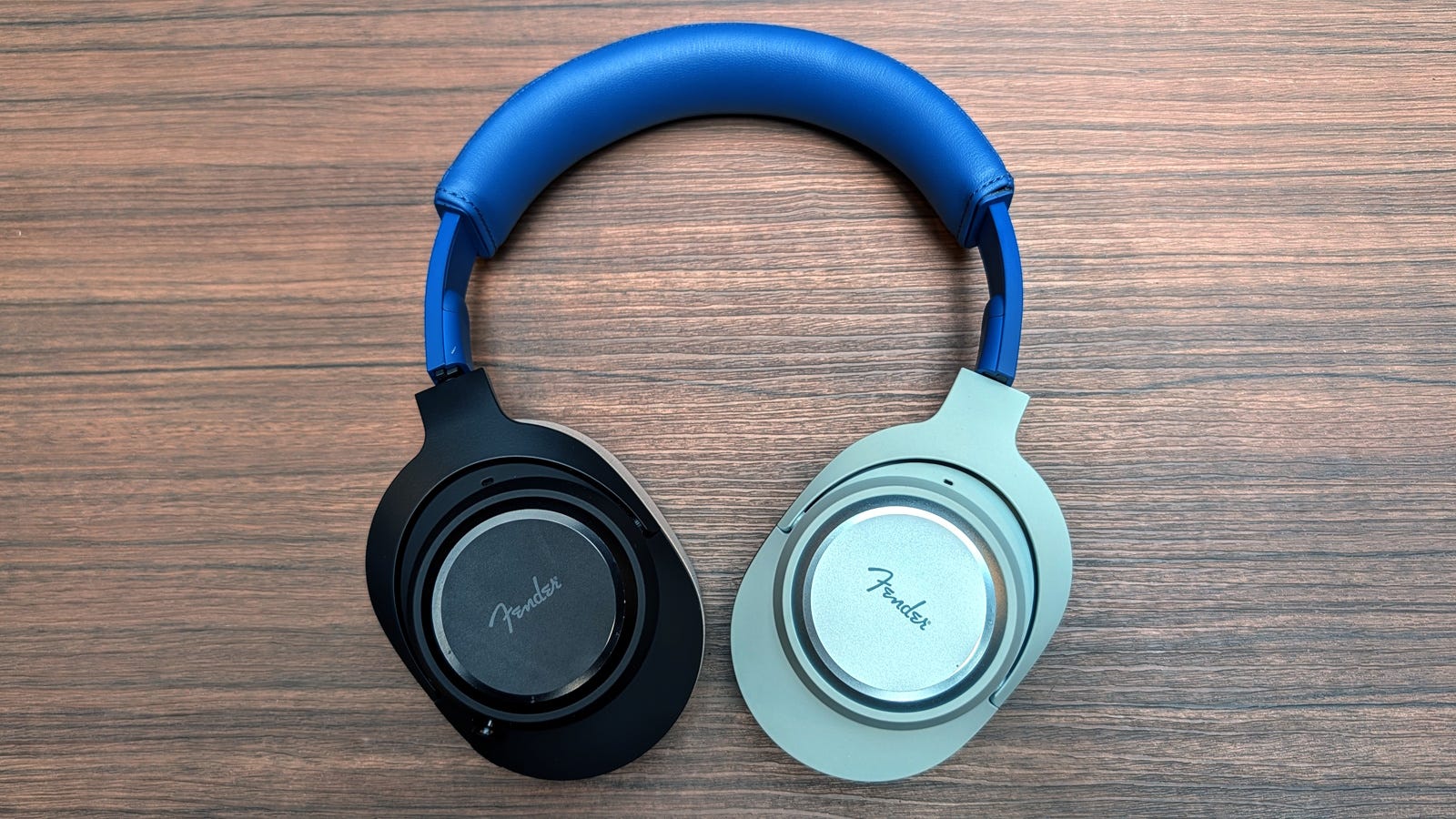
So I made a promise to myself then that I wouldn’t buy any more new headphones. That lasted until I attended a Fender Audio event later that week, where I was immediately taken by its new headphones, which seemed like the perfect answer to my woes.
See, the new Fender Audio Mix headphones have a modular, mix-and-match design that lets users switch out the various components. Which means you can easily customise them — the parts fit together like LEGO blocks — and if one component breaks, you can just replace it. Even the battery, which is concealed within an ear cup, can be replaced by the user.
I was also quite taken by the fact that the USB-C wireless dongle, which enables low-latency and lossless connectivity for the Fender Audio Mix, is actually concealed inside one of the ear cups. Having misplaced my share of wireless dongles for mice and headsets myself, this seems like a great feature.
Now, the Fender Audio Mix isn’t quite there yet. The brand has planned for five colourways, but only the black and the white versions are available for pre-order at S$468. Even the companion app to tweak the headphones is still in the works. According to Mr Mah Chernwei, CEO of Riffsound, the Singapore-based company that makes the products under license from Fender, it would take another 12 to 18 months for everything to be ready.
What’s surprising to me is that more audio firms haven’t created their own modular headphones. A cursory online search for modular headphones only brings up the TMA-2 headphones from Aiaiai Audio. None of the big audio brands appears to have launched any modular headphones, despite the fact that the TMA-2 headphones have been around for over a decade.
Perhaps there’s insufficient demand for such products. Maybe it’s too difficult to manage and supply all the modular parts. But some firms are taking baby steps towards making their products easier to repair or replace. The latest Sonos Play portable speaker, for example, has a user-replaceable battery. Hopefully, we’ll see more of such products in the future. And maybe I won’t need to toss old gear down the chute as often.
This week, we had a blast trying out upcoming PS5 sci-fi shooter Saros, was impressed by the price performance ratio of the Redmi Buds 8 Pro, and wondered how cheap Windows laptops will fare against the budget MacBook Neo.
Slated to release on April 30, Saros is looking like a better version of Returnal with similar gameplay. But now there’s an ensemble cast that livens up the game. There’s also a new game mechanic — a shield to block and absorb projectiles — that also doubles as a melee weapon. And you get to keep your weapon you had been using before your character died. In short, we can’t wait for the full game.
For around S$80 or less, it’s hard to find wireless earbuds that offer more than the Redmi Buds 8 Pro. Not only do these earbuds have good active noise cancellation, they also come with plenty of features, including in-ear detection, dual-device connectivity, and even a Find feature. These earbuds sound pretty good, too.
Apple MacBooks have never been as affordable as the Neo, which starts from S$849. For that low price, you’re getting a solidly-built aluminium laptop that can handle any computing task from most users, from editing 4K videos to RAW photo editing. There are some drawbacks, like no backlight for the keyboard and just one USB 3.0 port (the other one is USB 2.0). Also, the 512GB version has Touch ID, unlike the base 256GB model.


