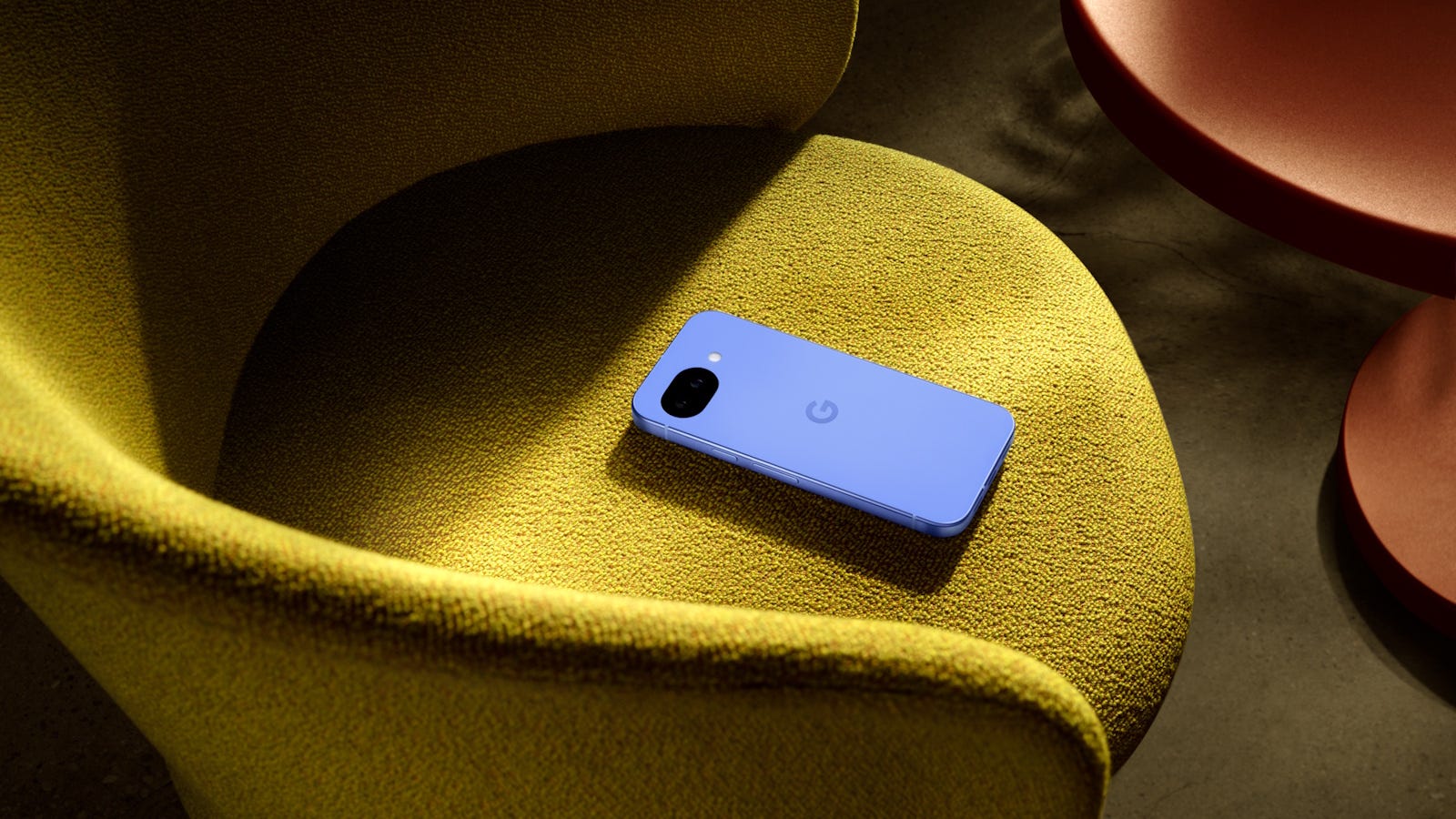
Google Pixel 10a is not the upgrade you're looking for
Don't fix it if it ain't broke?
I’m expecting the review unit of Google’s latest Pixel 10a today. It will either be the easiest or the hardest product that I will likely test this year. Easiest because it’s essentially a rebadged Pixel 9a. And the hardest as there’s hardly anything new that I can write about.
There’s a new coat of paint, along with some miniscule differences (does the peak brightness of 3,000 nits vs 2,700 nits even matter to anyone?) and some software features that are arbitrarily limited to the Pixel 10a because Google wants you to buy the new model, even though there’s probably no hardware limitation preventing the Pixel 9a from having these same features since the phone uses the same Tensor G4 chipset as the Pixel 10a.
Spot the hardware differences in this table from Google:
So it’s technically not the same Tensor G4 because the G4 in the Pixel 10a has a newer modem that enables satellite SOS. Perhaps there are other hidden optimisations that Google’s marketing claims will have “faster app loading, smoother multitasking, and even more sophisticated on-device Google AI capabilities.” But this Google Store page calling the new phone a “brilliant evolution in Google's A-Series”? That’s cringey. Especially since the Pixel 10a breaks with tradition by using last year’s G4 — instead of having the same chipset, like previous A-Series models, as the other higher-end Pixel phones (which would be the Tensor G5).
Now Apple and Samsung have done the same minor product refreshes in the past, and you wouldn’t bet against them doing so again in the future. Besides, most people wouldn’t know or care that the Pixel 10a is a rehashed version of last year’s model. All they need to know (from the ads) is that it’s the newest “affordable” Pixel (it starts at S$799 for the 128GB version) with the same helpful AI features you’d find on the more expensive Pixel 10 phones.
Frankly, companies should stop with the yearly refresh cycle. Many audio brands, for example, often release a new product after several years. If there’s no meaningful upgrade to be made, why force the issue? But we have to appease the gods of consumerism and capitalism. And that means releasing “new” products to snag the fickle attention of consumers. Of course, we can always choose to hold onto our devices longer. That’s certainly a trend nowadays.
This week in reviews, we tried MSI’s slim office productivity laptop, had an interesting experience with the AI in Arlo’s new pan-and-tilt indoor camera, and took plenty of photos and videos using Sony’s new A7 V mirrorless camera.
The MSI Prestige 14 AI+ is a slim premium-looking office laptop that delivers outstanding battery life. As one of the first laptops powered by Intel’s latest Core Ultra 3 processor, it’s also well-equipped for AI workloads, and supports the latest Windows Copilot+ PC features.
At S$69, the Arlo Essential Pan Tilt Indoor Camera is an inexpensive home security camera that has all the essential hardware features, like a siren and 2K video capture. But its best features rely on cloud-based AI processing. In short, you’ll need a subscription to enjoy its smart detection features, from recognising faces to describing and captioning the scene captured in videos.
The latest Sony A7 V promises faster readout speeds and no blackouts for continuous shooting, while also having better battery life than its predecessor. Auto-focus is slightly faster — thanks to an AI chip onboard the A7 V — but if you already have the previous version, it’s probably unnecessary to upgrade.


