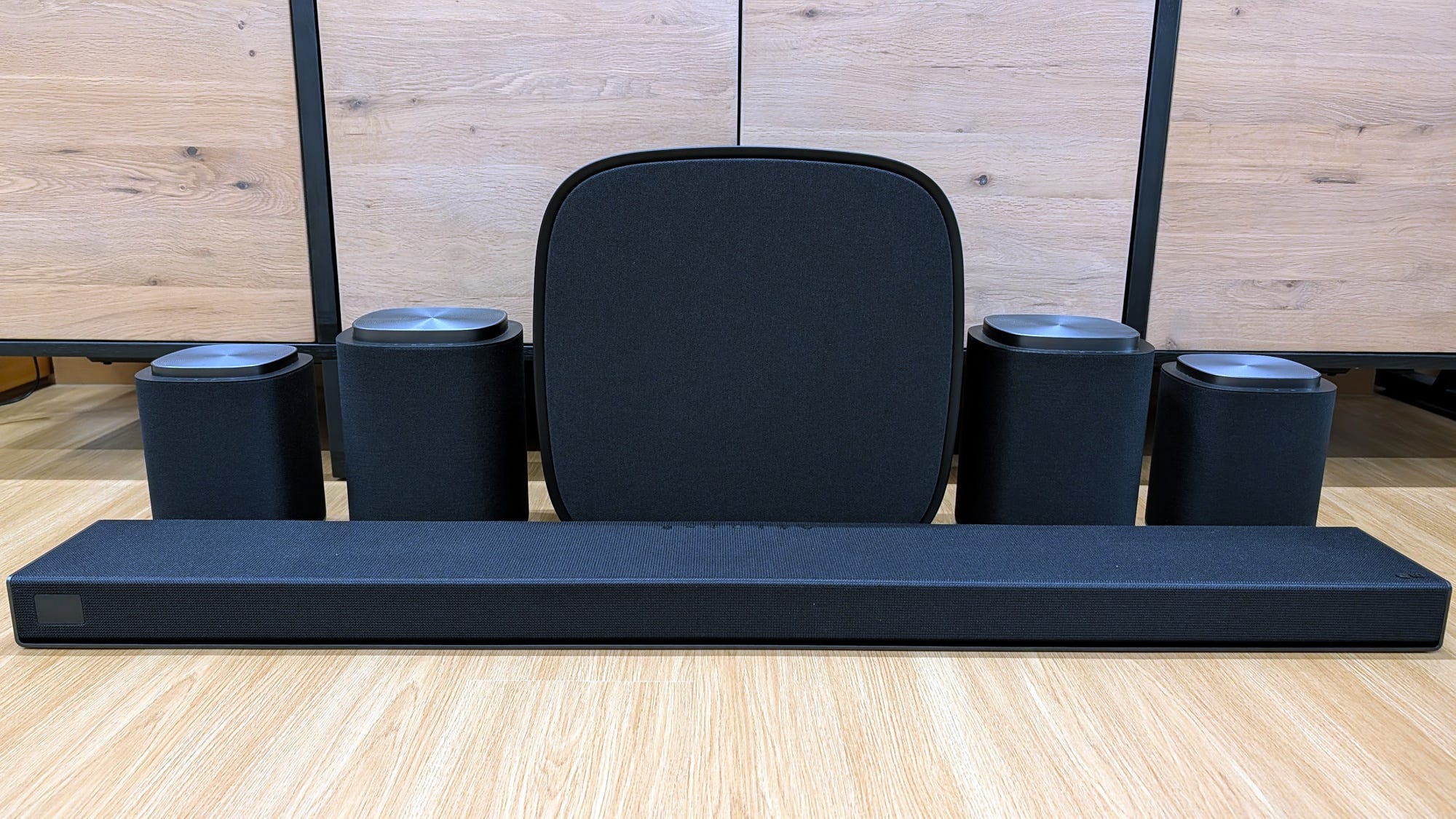
Dolby Atmos FlexConnect living up to promise
Also, Sonos needs to up its game

You probably know of Dolby Atmos, which adds height channels to create a 3D sound that appears to be all around you. It’s the spatial sound experience touted by everything from in-ear headphones to tablet speakers.
But most of us have probably not experienced Dolby Atmos FlexConnect (DAFC for short), which is supposed to be the next evolution of Dolby Atmos. What DAFC does is to let users place the speakers anywhere in the room, and Dolby will handle the rest i.e create an immersive 3D sound around the listener, regardless of the number or position of the speakers.
This versatility is the key selling point, since not every home has been designed from scratch for home theatre. You can even start small — with just a couple of wireless speakers — and add more speakers when you have the budget (or the space). This is because the brains using DAFC to make sure everything sounds correct acoustically is actually the TV, which also provides the centre channel.
This limitation of having a compatible TV is likely why, despite being announced back in 2023, it has taken a few years for Dolby Atmos FlexConnect to make its way into actual products. Chinese TV maker TCL was the first to introduce DAFC in its TVs (select 2025 models), and uses TCL Z100 speakers (up to four wireless speakers and a sub) to create the Dolby Atmos experience.
I didn’t get the chance to try this implementation of DAFC, but I finally tried the technology out with the newly-launched LG Sound Suite. Unlike TCL’s version, LG offers a soundbar, which orchestrates everything instead of an LG TV. So you can enjoy DAFC with any TV, unlike with TCL’s version. Another plus for flexibility! Of course, you could still use an LG TV for the processing, and create a similar experience with just four of the LG Sound Suite speakers.
But most importantly, DAFC works as advertised. It can’t do miracles, of course. You can’t place every speaker at the front and still expect a dome of 3D sound around you. But I could place the speakers haphazardly around my listening position, and still get the spatial sound effect. I could also even switch my listening position in the LG ThinQ app, and the speakers will re-optimise the sound for the change. It’s great.

As a Sonos user, I feel I’m somewhat experienced with the process of calibrating speakers to fit the acoustics of the room (and account for the position of the speakers). Dolby is basically doing what my Sonos speakers do with TruePlay, but faster and without the manual calibration step that requires waving an iPhone around my space. Not to mention that DAFC is much more flexible about the placement. For instance, Sonos still doesn’t support front left and right speakers for its home theatre setup. That’s despite the fact that plenty of users have been asking for it, and there’s even a third-party app that unlocks this functionality.
Now I did encounter some issues with the speakers when it came to setting them up. But I can’t be sure if that’s down to Dolby or LG. Perhaps I’ll have a better idea when I try other speakers with DAFC. A potential roadblock: I wonder if brands, like Samsung and Sony, which already have their own wireless surround sound systems will be less keen to support a competing technology.
In any case, Dolby Atmos FlexConnect is definitely something you may want to keep an eye out for, even if LG’s implementation doesn’t quite get everything right. Read our review of the LG Sound Suite here.
This week, we tested Anker’s very capable in-ears, which can even do AI note-taking, tried Dyson’s portable hair dryer, and watched a lot of TV on LG’s latest C6 OLED TV.
For a pair of in-ear headphones, the Anker Soundcore Liberty 5 Pro Max is surprisingly capable. Not only does it offer good audio and strong noise cancellation, it also has a display, and can even double as an AI-powered note taking device via its charging case. More importantly, it’s competitively priced at S$299.
With its built-in universal voltage, the Dyson Supersonic Portable can work anywhere in the world. You do lose the extra features (only two speeds and just three heating settings) and accessories (only a smoothing nozzle) from Dyson’s other hair dryers, but this portable and compact hair dryer is only 330g. And it’s also much cheaper than other Dyson dryers at S$399.
The LG C6 is an excellent mid-range OLED that impresses with its picture quality. But the webOS interface feels even more bloated than before — and now requires an LG account — while the directional keys on the reworked remote control isn’t the most precise at registering your input. The C6 did launch at a slightly lower price than its predecessor, though it may be worth taking a look at last year’s model instead.


