Apple X Google AI
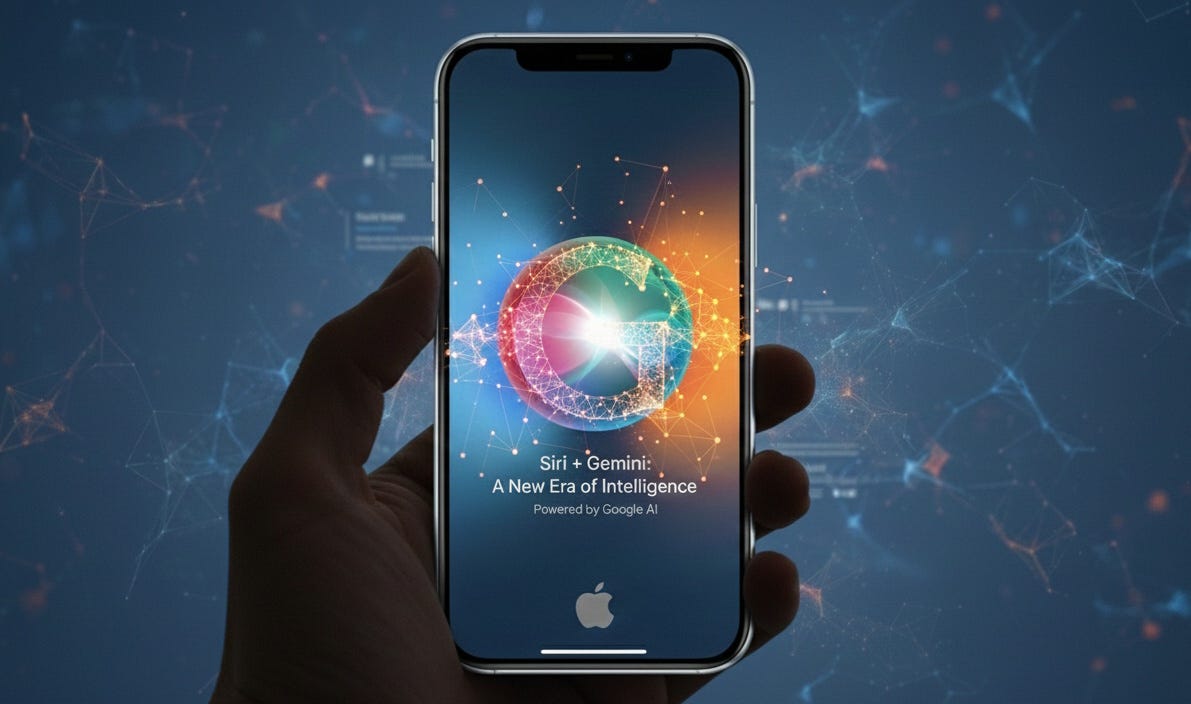
Google Gemini AI models to power revamped Siri and Apple Intelligence
Well, it looks like the days of clowning on Siri and Apple Intelligence are ending soon. Apple has picked Google’s Gemini models to power a more personalised Siri and other future Apple Intelligence features, presumably after a thorough evaluation of other options, including ChatGPT, which Apple has been using as a stop-gap for more complex requests.
We can probably expect this new revamped version of Siri and other Apple Intelligence features to debut later this year — most likely after WWDC. But more importantly, this multi-year partnership with Google cements Gemini as the default choice for AI on smartphones.
While many Android smartphone makers have their own AI features for tasks like text summary and image editing, Gemini is the AI assistant on practically all Android devices, including major brands like Samsung. And it’s not hard to see why. The latest Gemini 3 models rank highly in AI benchmarks against its biggest rivals, and may even be more cost effective.
So Apple picked the right horse here, even if this move is a clear admission that the trillion-dollar tech giant was never in the AI race. That’s not a slight on Apple. The company may have dropped the ball here, but was it necessary for Apple to come up with its own AI models? Instead of building costly data centres to compete with other AI firms, it’s probably cheaper for Apple to license the models, just like how it uses Google’s search engine as the default on its devices.
What’s more important here is how Apple integrates Gemini into its products, and whether they can make it a seamless, frictionless part of the software and user interface. End users won’t care which AI model is doing the work as long as the results are good. For starters, having something like Google’s Circle to Search on the iPhone would be a definite improvement over Apple’s Visual Intelligence, though I bet Apple will come up with its own take instead of copying it entirely.
Given how Apple has promoted security and privacy on its products as a key selling point, you can expect the same principles to apply here. The AI models will likely either run onboard Apple devices or on Apple’s Private Cloud Compute servers.
As for OpenAI, I can’t imagine that ChatGPT will continue to be used in Apple devices after this Gemini collaboration kicks in. The AI firm may have caught Google with its pants down when it debuted ChatGPT back in 2022, but Google has since risen to the challenge. This move will certainly fuel more uncertainty over OpenAI’s future, and how it can justify the massive investment in AI infrastructure.
This week, we checked out a new wireless game controller from Asus, tested the many configurations of the JBL Bar 1300MK2 soundbar and drew some emojis on a truly large 31.5-inch monitor.
If you’re looking for a premium wireless controller for the Xbox and PC, the Asus ROG Raikiri 2 (S$289) offers all the latest technology like anti-drift TMR joysticks that feel responsive and clicky micro-switch buttons. The controller is also very customisable — you can use the web-based Gear Link tool to easily configure it.
The JBL Bar 1300MK2 is a powerful 11.1.4 Dolby Atmos soundbar with an included wireless subwoofer and two detachable rear speakers. The latter adds to the versatility of this setup, as you can use them as single or stereo Bluetooth speakers to play streaming music. That’s on top of using them as rear surrounds, and as the primary speakers for night listening because they are quieter. It’s expensive, though, at around S$2,300.
For creative professionals that need a huge canvas for their work, the Acer ProCreator PE320QXT is worth a look. This 31.5-inch monitor gets touch functionality when connected to your PC via USB, thus allowing users to draw and create content using the included stylus. There’s even a built-in webcam for video calls and meetings. Downside: It’s very reflective, and not that cheap at S$1,799.


